The Comment Box Is a Shop Counter: A Daily Routine for Turning Replies Into Bookings
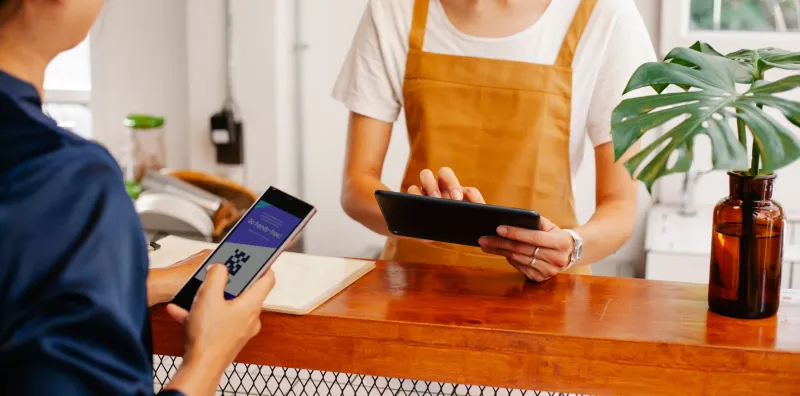
Most small businesses treat comments like confetti. Nice to see, easy to ignore, vaguely embarrassing when they pile up. That is a mistake. For a UK small firm, the comment box is a shop counter. People are standing there, asking questions, waiting for an answer and deciding whether to spend money with you.
A reply is not a chore after the real marketing. The reply is the campaign. It is where a casual scroll becomes a booking, a delivery enquiry becomes an order and a complaint becomes a story about how you handled it well.
Why comments deserve a till, not an afterthought
Social platforms love to push people into DMs. DMs are useful, but comments are public. They are social proof in motion. When someone asks 'Is it dog-friendly?' and you answer clearly, you are not just helping one person. You are helping the next twenty people who had the same question but did not want to ask.
For shops and local services, comments often carry the questions that decide a sale: parking, delivery postcodes, dietary options, whether there is step-free access, whether the match is on, whether you can bring a buggy. These are not fluffy engagement metrics. They are the last barrier before someone gets in the car or taps 'book now'.
Set a response clock you can actually keep
Forget the fantasy of replying within five minutes forever. Pick a response clock that matches your opening hours. A simple standard: reply within one hour during trading hours, and same day for anything that arrives after closing. Put that in your bio or pinned post if you want to set expectations. Then stick to it.
If you are a one-person shop, do not promise 24/7. Promise 'we reply between 9am and 5pm, Tuesday to Saturday' and mean it. A clear clock builds more trust than a vague promise of speedy service.
Tone: human, not corporate
You do not need to be a comedian. You do need to sound like a person. 'Thanks for asking, yes we are dog-friendly, water bowl by the door' is perfect. 'We can confirm that dogs are permitted on the premises' is a council memo.
Use the same voice you use at the counter. If you would say 'no worries' in real life, say it online. If you would say 'course you can', say that. Keep it short. Answer the question first, add the extra detail second. People are not reading for pleasure. They are trying to make a decision.
Pinned replies that do the heavy lifting
A pinned reply is a quiet superpower. On a post that asks a common question, pin your answer to the top. It saves you repeating yourself and it helps people who arrive late to the thread.
Use pinned replies for recurring UK questions: 'Do you deliver to my postcode?', 'Is there parking nearby?', 'Are you showing the match?', 'Can I bring my dog?', 'Do you have gluten-free options?' Keep the reply friendly and specific. If the answer changes, update it. A pinned reply from three years ago is worse than no pinned reply at all.
Common questions and how to convert them
A question is not always a booking. But it is usually the start of one. The trick is to answer, then offer the next small step.
'Is it dog-friendly?' Answer yes or no. Then add the useful detail: water bowl, treats, where the lead hooks are. If you take bookings, add 'we have a quiet corner table at 11 if you want it'.
'Do you deliver to my postcode?' Do not just say yes. Ask for the first part of the postcode and tell them the next delivery day. If it is outside your zone, offer click and collect or a nearby pickup point. A clear no is better than a vague maybe.
'Can I bring my buggy?' Answer directly. Mention step-free access, door width or where to park the pram. This is a real barrier for local parents and a good comment answer can win a regular.
'Are you taking bookings?' Reply with the link and one line about availability. If you can, hold a slot for a short time. 'We have 2pm or 4.30pm on Saturday, want me to put you down?' is a conversion, not a reply.
'How much is it?' Give the price. Hiding prices in DMs is a local business habit that costs sales. If your pricing is complex, give a starting price and invite them to send details.
Handling complaints in public
Complaints are the bit everyone dreads. Handle them like a shop floor, not a courtroom. Acknowledge the issue. Apologise for the experience, not necessarily for facts you do not know yet. Move the details to DM. Give a timeline for a response. Do not argue in the thread. Do not delete a fair complaint. Delete abuse, spam or personal data, but never delete a reasonable customer having a bad day.
A good public reply sounds like: 'Sorry to hear that, that is not the experience we want anyone to have. Could you send us a DM with the date and time so we can look into it?' That tells everyone watching that you are a business that responds. That is worth more than a hundred perfect five-star reviews.
The 15-minute daily routine
You do not need to live in your notifications. You need a routine.
Morning, five minutes: triage. Open comments on your two busiest posts. Answer anything with a question mark. Pin one useful reply. Flag complaints for a proper reply later.
Lunchtime, five minutes: clear the new comments. Reply to the easy ones. Send booking links or delivery details. If a question needs a colleague, tag them or write a reminder.
Late afternoon, five minutes: close the loop. Check that complaints have been answered. Reply to anyone who came back with a follow-up. Post one friendly comment on a neighbouring business post. That last bit is not admin. It is local networking in public.
What to measure
You do not need a dashboard the size of a bus. Track four things: average response time, how many comment questions turn into DMs, how many DMs turn into bookings or orders, and the questions you keep seeing. That last one is gold. If ten people ask about parking in a month, put it in your bio, your pinned post and your Google profile. Your comment section is telling you what your website should say.
In 2026, the businesses that win locally are not always the loudest. They are the ones who answer. Treat the comment box like the counter. Stand there, look up, and say hello.