Four Skies, Four Posts: Letting the Weather Set Your Social Schedule
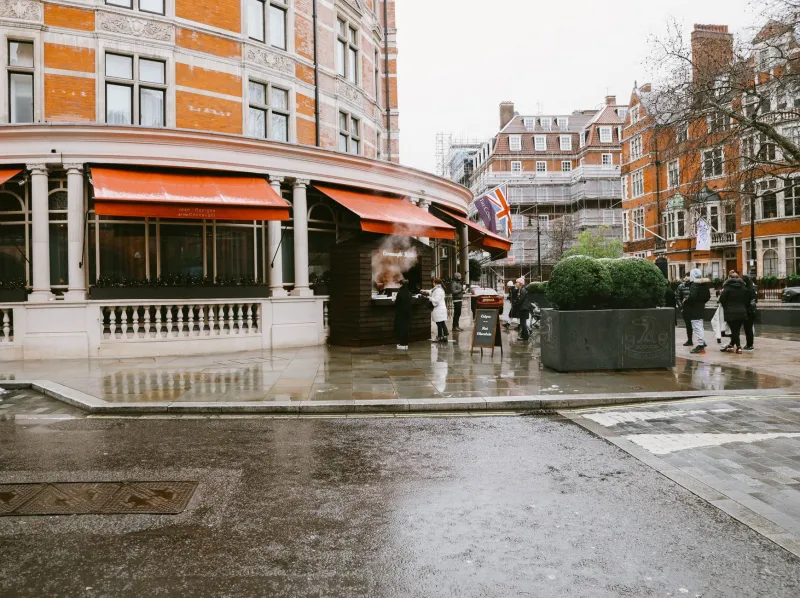
British weather is the most reliable small-talk topic we have. It’s also one of the most underused content triggers for UK small businesses. Most owners already react to the forecast — you move the A-board inside, put the iced coffee machine on, bring the winter coats to the front rail. The trick is to let your socials react in the same calm, practical way.
This isn’t about becoming a weather account. It’s about building a short list of local weather moments, deciding what each one means for your customers, and having a post or two ready before the sky changes its mind. Think of it as a campaign plan with the Met Office as your loose creative director.
Start with triggers, not topics
A weather-led plan works best when you write down three or four triggers you actually care about. Not every forecast deserves a post. For most high-street businesses, the useful ones are: proper rain, the first frost, a short heatwave, and the dark-afternoon shift in late autumn and winter.
For each trigger, answer three questions. What changes for my customer? What changes in my stock or diary? What can I say that is genuinely helpful? That third question is where most weather posts go wrong. “Rainy day blues? 20% off!” is not helpful. “We’ve got the dry buggy parking and the kettle’s on” is.
Keep the triggers specific to your patch, too. A café in Sheffield and a salon in Brighton will feel the same rain differently. Local references — the bus stop that floods, the park that gets muddy, the school run that turns into a swim — make the post feel like it comes from someone who lives there, not a brand account in a distant office.
Rain: the useful umbrella post
Rain is the easiest trigger to overdo. One sopping Tuesday does not need a full campaign. But a solid rainy-day post can do quiet work for a café, salon or independent retailer.
For a café, the angle is comfort and logistics. A photo of the window with rain on it, a line about the soup of the day, and the practical detail: “Dry buggy space by the back wall, dog towels by the door.” That is a post that earns its place. You are not begging people to come out in a downpour; you are telling them what will be easy if they do.
For a salon, rain is a no-show risk and a hair-care conversation. A story post the night before heavy rain — “If you’re walking in tomorrow, we’ve got spare umbrellas and a dry corner for coats” — is more useful than another generic appointment reminder. It also gives you a reason to mention a smoothing treatment or a quick dry-off add-on without sounding like a hard sell.
For an independent retailer, rain can shift stock. If you sell footwear, plants, pet kit or outdoor bits, a rainy spell is a natural moment to move waterproofs, potting bench supplies or muddy-paw towels into view. The post is not “buy this because it’s wet.” It is “here’s the thing that makes this week less annoying.”
First frost: the quiet warning
The first frost is a brilliant trigger because it is local, timely and genuinely useful. It catches people out. Gardeners, dog owners, cyclists, anyone who parks on the street — they all have a small frost-related job to do.
A café can use it for a warm-up post: the first proper hot chocolate, the porridge back on, the window seat that gets the morning sun. A salon can talk about dry indoor heat and winter hair without launching into a lecture. A retailer can flag grit bins, windscreen covers, cosy layers or whatever fits the shelf.
What makes this work is restraint. You are not running a “frost sale.” You are being the local business that noticed the forecast and said something useful before 8am. That kind of post builds more goodwill than a hundred generic graphics.
Heatwave: the short, sharp plan
A UK heatwave is usually short enough to plan for and long enough to matter. Cafés can push cold drinks, shady seating and early opening. Salons can offer early appointments before the heat builds, or a simple hair-up styling slot. Retailers can move fans, water bottles, sun hats or picnic bits to the front — but only if the stock is actually there.
The key is to prepare one or two assets in advance. A photo of the shady back courtyard. A short video of the iced drinks tray. A story template that says “open early, blinds down, water bowl out for dogs.” When the forecast tips over 28°C, you are not scrambling for content; you are just pressing send.
Dark afternoons: the mood shift
The clocks going back is a slower trigger than rain or frost, but it is powerful. Suddenly the 4pm school run feels like midnight. People want somewhere warm, lit and easy to walk into.
This is where independent shops and salons can lean into atmosphere without sounding like a Christmas advert in October. A café post about the lamps going on at 4pm. A salon post about evening appointments feeling less rushed now the dark is here. A retailer post about the window display lighting up the pavement. None of these need a discount. They just need to show that you understand what the season feels like on your street.
Keep it small, keep it ready
You do not need a dashboard or a meteorology degree. A simple note on your phone with four triggers and four rough post ideas is enough. Check the forecast once a week, then again on the morning of a big shift. Have one photo, one line and one practical detail ready for each trigger. If the weather doesn’t play ball, you have lost nothing. If it does, you look like the most switched-on business on the high street.
And remember: the point is not to chase every cloud. It is to be useful when the weather changes the day. That is what local social media does best.