Two Doors, One Street: A Week-Long Swap With the Shop Next Door

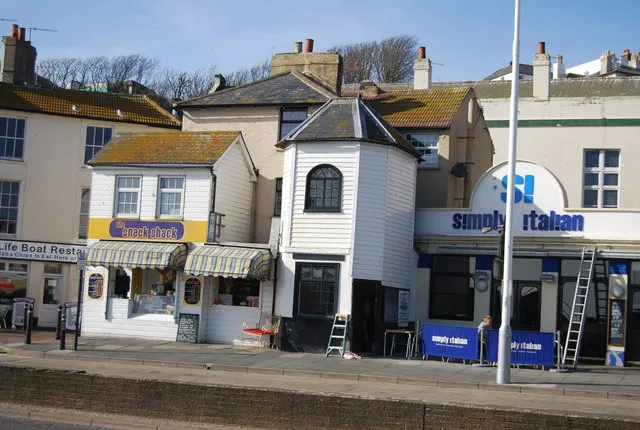
Photo: Dietmar Rabich, CC BY-SA 4.0, via Wikimedia Commons
There is a bakery on a street in Sheffield and a bike repair shop four doors down. They share a pavement, a set of regulars and a mutual understanding that neither of them is ever going to go viral. One Tuesday in October, the baker posted a photo of a puncture being fixed. The mechanic posted a photo of a sausage roll being eaten at a bench. Both posts did better than anything either account had published in a month.
That is the whole idea. Not a campaign. A swap.
Why local collaboration beats reach
A video that gets 40,000 views from Manchester, Melbourne and Manila is worth roughly nothing to a shop with one door and six parking spaces. What is worth something is eighty people from three postcodes who now know that the shop two minutes away does the thing they need.
You cannot serve reach. You can serve a neighbourhood. A swap with a nearby business is a low-cost, low-risk way of borrowing an audience that is already in the right place at the right time.
Choosing the right partner
Four tests, and any one of them failed is enough to walk away politely.
Not a competitor. Obviously. But be broader about it than you think: two cafés on the same street are competitors; a café and a florist are not; a café and a wedding photographer are not, even though both sell to couples.
Same customer, different need. The best swaps overlap on the person, not the product. The florist and the barber both serve people preparing for an occasion.
Similar standards. If they do not answer messages, they will not answer yours either, and you will spend the week chasing them.
Similar size. A 40,000-follower account paired with a 400-follower account is not a swap, it is a favour. That is fine occasionally, but call it what it is.
Ask directly and simply: 'We are thinking of doing a week of cross-posts with a few local businesses in the second week of March. Would you be up for it? No money involved, we just swap a few posts and see what happens.'
The shape of the week
Give the swap a structure so neither of you has to improvise.
Monday — introduction. Each of you posts a photo of the other's shopfront with two sentences on who they are and why you like them. Tag properly.
Tuesday — the small thing. Each posts a short clip of one small task done well. This is where audiences get interested, because it is the bit they never see.
Wednesday — the crossover. The genuinely good one. The baker makes something for the bike shop's staff; the mechanic services the bakery's delivery bike. Photograph the handover. This is the post people remember.
Thursday — the recommendation. Each of you recommends one specific thing the other sells. Be precise: not 'go and see them' but 'the Thursday cinnamon buns, get there before ten'.
Friday — the offer. A simple, shared, low-cost incentive. A stamp when you spend at both. A free coffee with a repair. Nothing complicated enough to need a spreadsheet.
Saturday — the story takeover. Each of you hands your stories over for two hours on a Saturday morning, the busiest window for local browsing.
Sunday — the thank you. One post each, tagging the other, with a photo from the week.
What each of you needs to hand over
Agree a small kit on the Friday before so nobody is scrambling:
- Five photos of the shop, landscape and portrait, no filters
- One short video, under twenty seconds
- Two sentences about what the business does and who for
- One quote from a real customer, with their permission
- Opening hours and the single best way to be contacted
That is it. One shared folder, done.
Measuring it properly
Forget reach for a moment. Ask three questions instead.
Did anyone mention it at the till? Brief everyone to ask 'how did you hear about us this week?' and write the answers down. This is the only metric that matters and it costs nothing.
Did the messages change? New enquiries from people you have never served, in the week of and the two weeks after.
Did either account gain followers who live nearby? Not the number — the geography. Scroll the new followers and see if they look local. If they do, the swap did its job.
If you want something more precise, give each partner a code word. 'Say bike shop at the counter and we will knock a pound off.' Crude, but you will know within a fortnight whether the swap was worth repeating.
What could go wrong
Your partner posts nothing and you have already published four posts about them. Fix: agree the schedule in writing, and check in on the Monday.
A comment thread gets odd. Fix: agree in advance who moderates what, and that neither of you replies on the other's behalf.
One side gains far more than the other. Fix: nothing, really. Just remember it next time and choose a closer match.
Then do it again in six months
One good swap is a nice week. Three good swaps a year turn into a small local network — the florist, the barber, the bakery, the bike shop — all pointing at each other. That is what a neighbourhood brand looks like from the inside. It is unglamorous, it is local, and it works far harder for you than a video with the wrong postcode on it ever will.