The Two-Week Whisper: Launching a New Range With Nothing But a Phone
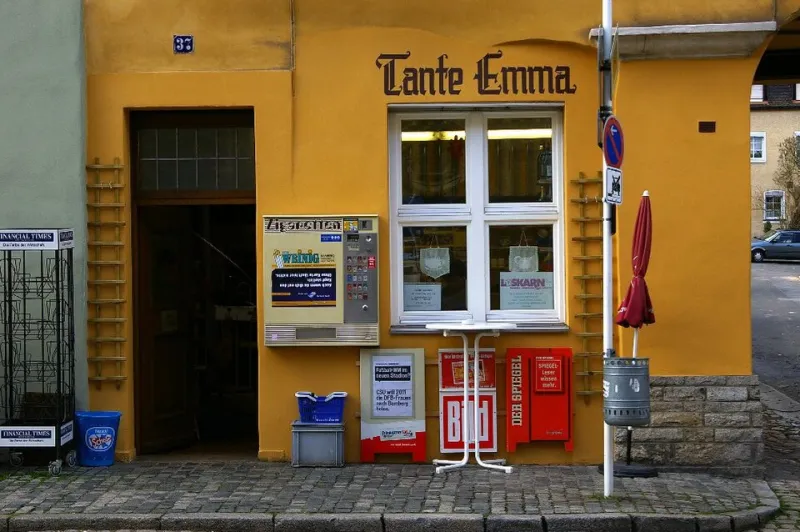
Photo: Reinhard Kirchner, CC BY-SA 3.0, via Wikimedia Commons
There's a particular kind of small-business launch that goes like this: you spend three months making the thing, you post one photo of it on a Tuesday, and then you sit there refreshing the analytics like a kettle that won't boil. The product was never the problem. The lack of a runway was.
This is the plan we'd run if the marketing budget was precisely zero and the product was genuinely good. It takes two weeks of build-up, a phone, and a willingness to be a bit unpolished in public.
Start With the Thing, Not the Campaign
Before you post anything, get honest about what you've actually made. Not the features — the reason someone in your town would choose it over the version they could get from a big retailer by lunchtime tomorrow.
Write that reason down in one sentence. If it takes three sentences, you haven't found it yet. That sentence becomes the spine of everything for the next fortnight, and it stops you drifting into generic "we're so excited to announce" territory, which nobody has ever shared with a friend.
Week One: Show the Mess
The first week isn't about the product. It's about the process, because process is the one thing a chain store can't copy. This is where a maker's feed quietly outperforms a brand's.
- Day 1–2: A single photo of raw materials, a workbench, a sample that didn't work. Caption it plainly. No filter needed, but do clean the lens.
- Day 3–4: A short vertical video — 15 seconds is plenty — of one step in the making. Hands and tools, not faces, if you'd rather stay off camera.
- Day 5: A Story poll. "Which of these two colourways would you actually wear?" This is doing two jobs at once: it's engagement, and it's free product research you can act on before you've committed to your full run.
- Day 6–7: Post the near-final version and say, without drama, that it's coming. Give a date. A specific one. "Saturday the 21st" beats "coming soon" every single time.
The temptation in week one is to hold everything back for launch day. Resist it. Nobody outside your immediate family gets excited about a reveal they had no stake in.
Week Two: Build the List, Not the Hype
Now you want names. Not followers — names. People who have actively said "tell me when".
You don't need a CRM or a paid email platform for this. A free-tier mailing list sign-up will do, and the link lives in your bio and in a Story highlight called something boring and useful like New Range.
How to actually get sign-ups in a week:
- The Story sticker. Use the link sticker on every launch-adjacent Story for seven days. Say what they get for signing up: first pick, a collection slot before it goes on general sale, a heads-up on price. Something real.
- The comment trade. "Comment RANGE and I'll send you the link." It's low-effort, it works, and it gives you a private message thread you can reply to personally.
- The direct ask. If you have 300 followers and 40 of them are regulars, message the regulars. Yes, individually. It takes twenty minutes and it converts better than anything you'll do all fortnight.
A list of sixty warm names beats six thousand passive impressions. That's not a motivational line, it's just how small retail maths works.
Launch Day: The Order of Operations
This is where most zero-budget launches fall apart — everything goes out at 8am and by 4pm it's buried. Stagger it.
- Morning (around 7.30–8.30am): Email or message the list first. Give them a two-hour head start. This is the reward for signing up, and it makes them feel like insiders rather than recipients of a newsletter.
- Late morning (11am): A feed post — one strong image, the one-sentence reason, the link. Keep the caption short enough that the photo does the work.
- Early afternoon (1–2pm): Stories with the practical detail. Price, sizes, how to collect, how long it'll take to post. People want logistics at lunchtime, not poetry.
- Evening (6–7.30pm): A reel or video, plus a reshare of the first sale or first message. Social proof at the hour when people are on the sofa with their phones.
Four touchpoints, one day, no money. If you can only manage two, do the morning email and the evening video.
The Collection Counter
If you have a physical door, collection is your unfair advantage and you should be shouting about it far more than most shops do.
Be specific in the launch posts. "Free collection from the shop, Thursday to Saturday, 10 till 4" is a complete offer. "Available for local pickup" is a shrug. Mention the nearest landmark or the parking situation, because half your buyers will have stood outside your shop before and forgotten it exists.
Then make the handover itself content. A photo of the first bag going out the door, a shelf of reserved orders with names on, the queue on a Saturday morning. Buyers love seeing themselves in it, and it quietly tells everyone else that other people are buying.
Turning First Buyers Into the Second Wave
Your launch doesn't end when the stock does. If anything, that's when the useful part starts.
The ask is simple, but it has to be specific. Not "tag us in your photos" — instead: "If you do get a photo of it in use, send it over. I'm putting together a proper customer gallery in a fortnight and I'd love you in it." Framing it as an invitation to be featured works far better than framing it as a favour.
Then close the loop. Repost every single one, credit the person, and reply with something that isn't just an emoji. If someone sends a photo, they've given you an asset worth more than the ad budget you didn't spend — treat it accordingly.
A small reward helps too, and it doesn't have to cost anything: early access to the next drop, a first-look at a colourway, a reserved slot. Access is cheap to give and surprisingly valuable to receive.
What Zero Budget Actually Buys You
It buys you time and attention instead of reach. That's a worse deal if you want a thousand sales by Friday, and a better one if you're building a shop that people come back to.
The realistic outcome of a fortnight like this isn't a sell-out. It's a list of a few dozen people who now know what you make, a handful of photos you own the rights to, and a set of posts that told the truth about how the thing was made. You can run that again in three months with the next range, and it'll be faster and warmer the second time.
Start on a Monday. Show the mess first. The rest follows.